Is Our Intelligence Outpacing Our Wisdom?
Beyond Algorithms: Restoring Human Wisdom in the Age of Artificial Intelligence

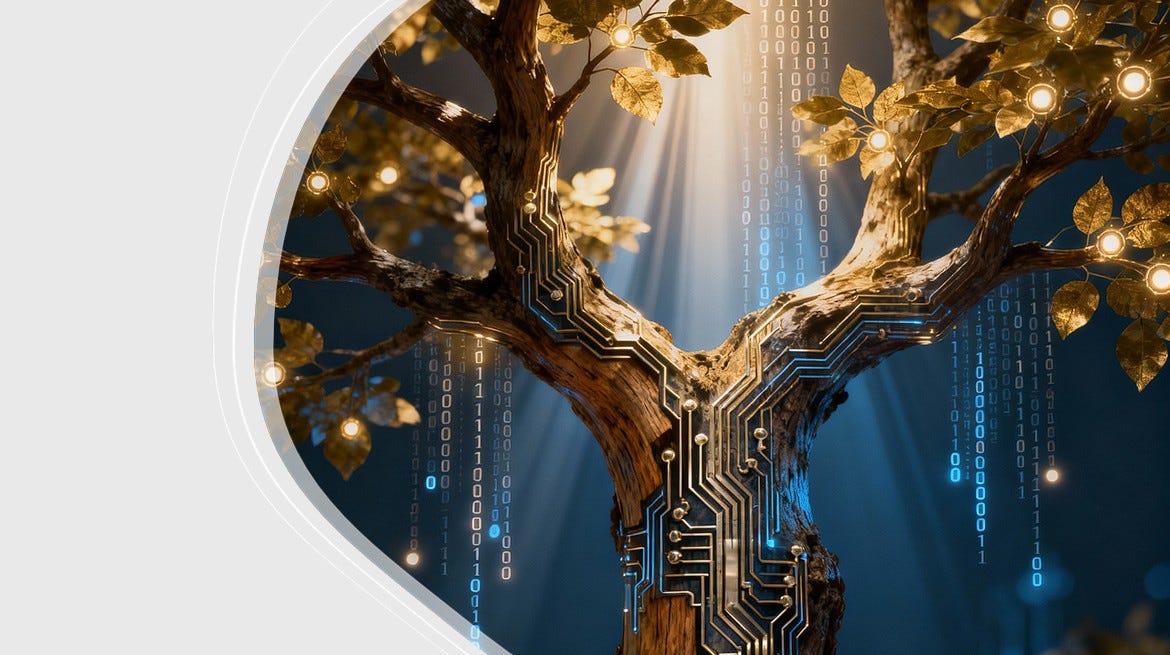
We live in an extraordinary moment in history—one where machines can write, diagnose, forecast, compose, even console. Algorithms now decide what we see, what we buy, and sometimes even what we believe. Technology no longer just assists our lives; it defines the boundaries of our choices and identities.
Yet beneath that breathtaking capability lies an unsettling asymmetry: our intelligence has raced ahead, but our wisdom has not kept pace.
We have built a civilization fluent in information, but impoverished in meaning. We can simulate understanding, yet often fail to embody empathy. The capacity to calculate has outgrown the capacity to care. Our tools have evolved faster than our principles.
It is easy to mistake acceleration for advancement. The brilliance of our innovation disguises the darkness of our intentions. We measure progress in metrics—speed, profit, efficiency—metrics that rarely ask whether we are moving in the right direction.
Our systems, from global markets to personal ambitions, increasingly reward mastery without morality. The question is no longer can we build it but should we?
Technology does not corrupt us; it amplifies what already resides within. If greed guides the invention, invention becomes greed’s servant. When wealth and influence are treated as indicators of wisdom, every algorithm bows to the same false god: accumulation.
We may soon master the mechanics of intelligence, but we remain apprentices in the art of character.
There was a time when moral formation was central to education, leadership, and community life. Today, it has been outsourced to policies, corporate statements, and vague notions of “values.” Ethics is now a checkbox; morality, a brand asset.
The automation of thought has brought with it the erosion of conscience. We have become so obsessed with optimizing outcomes that we have forgotten how to orient ourselves around truth.
But morality is not a restriction—it is a rhythm. It is the choreography between freedom and restraint, ambition and humility, intellect and compassion. True morality gives progress its cadence and humanity its coherence.
Every enduring civilization has been anchored by this moral rhythm. When it faltered—when desire eclipsed duty and profit outshouted principle—collapse was never far behind.
Every moral act, no matter how complex, rests on three questions:
What is my obligation?
To whom am I accountable?
And why do I act?
When these questions fall silent, knowledge becomes noise, and innovation becomes invasion. We move faster but understand less. We design tools that reach the stars but fail to reach each other.
The challenge before us is not to make machines ethical—it is to make human beings moral again. Conscience cannot be coded; it must be cultivated. Accountability cannot be automated; it must be lived.
The restoration of moral clarity will not come from sharper algorithms but from deeper alignment—between intellect and intention, ambition and accountability. Innovation must once again submit to something higher than itself: truth, justice, compassion.
Otherwise, progress turns from promise to peril. Artificial intelligence, untethered from moral intelligence, will not elevate us—it will expose us.
We stand at a crossroads of our own creation. Every technological leap gives us a mirror: it shows not who we might become, but who we already are. What we build next depends not on capability, but on character.
Perhaps the real question is not whether machines can think, but whether we can still feel. Not whether they will surpass us, but whether we will surrender what made us worth surpassing.
Our era will not be remembered for the brilliance of its code, but for the courage—or cowardice—with which it guided that brilliance.
And so, the question remains:
Will our intelligence continue to outpace our wisdom, or will we reclaim the moral ground upon which true progress stands?